





Common HVAC repair mistakes can turn a manageable problem into an expensive breakdown. Ignoring warning signs, postponing maintenance, attempting unsafe DIY repairs, or approving work without a complete diagnosis may increase energy costs, damage critical components, and shorten the system’s service life.
Steve’s Ultimate Air Heating & Cooling Services LLC helps homeowners in Chandler, Gilbert, Mesa, Tempe, and nearby East Valley communities identify HVAC problems accurately before minor issues lead to more extensive repairs.
Reliable air conditioning is especially important during Arizona’s hottest months. Understanding which repair mistakes to avoid can help homeowners protect their equipment, manage repair expenses, and maintain dependable indoor comfort throughout the year.
Overlooking a Clogged Air Filter
Failing to inspect and replace the air filter is one of the most common HVAC maintenance mistakes. As dust, pet hair, and other debris collect in the filter, airflow through the system becomes restricted. The blower must then work harder to circulate conditioned air throughout the home.
Restricted airflow can contribute to uneven temperatures, longer cooling cycles, higher energy consumption, frozen evaporator coils, and unnecessary strain on the blower motor. It may also allow more dust to circulate through the home or collect inside the HVAC equipment.
Homeowners should inspect the filter regularly, especially during periods of heavy air conditioner use. Homeowners should inspect the air filter regularly and replace it when it becomes dirty. Replacement frequency varies based on the filter type, household conditions, indoor air quality needs, and how often the HVAC system operates.
The replacement filter should also match the system’s specifications. A filter that is too restrictive may reduce airflow even when it is new. If you are uncertain about the correct filter size or rating, ask an HVAC professional for guidance.
Waiting Until the HVAC System Breaks
An HVAC system can continue cooling even while minor problems develop. Dirty coils, loose electrical connections, partially blocked condensate drains, worn components, and restricted airflow may gradually reduce performance without causing an immediate breakdown. Waiting until the equipment stops working can allow these concerns to create additional wear or contribute to a more extensive repair.
Preventive maintenance gives a technician an opportunity to identify developing issues before the summer cooling season places greater demand on the system. During a professional inspection, the technician may test electrical connections and system controls, inspect the condensate drain, evaluate airflow, examine accessible components, and verify proper startup and shutdown.
East Valley homeowners should generally schedule professional air conditioning maintenance before peak summer temperatures arrive. Maintenance cannot prevent every failure, but it can reduce avoidable strain, reveal the system’s current condition, and provide time to plan for recommended repairs. This helps homeowners avoid making rushed decisions after an unexpected loss of cooling during extreme Arizona heat.
Attempting Unsafe DIY HVAC Repairs
Homeowners can safely perform several basic tasks, such as replacing an accessible air filter, checking thermostat settings, and removing loose debris from around the outdoor unit. Internal electrical repairs, refrigerant service, and component replacement should be handled by a qualified HVAC technician.
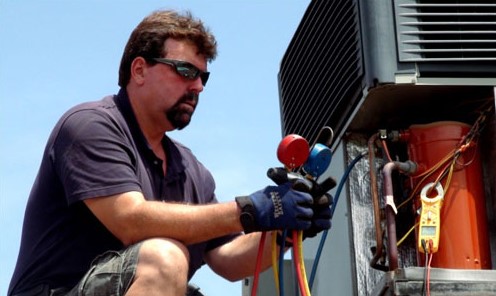
HVAC equipment can contain high-voltage electricity, pressurized refrigerant, moving components, sharp metal edges, and hot surfaces. Removing access panels or replacing internal parts without proper training may cause personal injury, equipment damage, or an incomplete repair.
Refrigerant service requires specialized training, qualifications, and equipment. Homeowners should not attempt to add refrigerant, connect gauges, or repair a suspected refrigerant leak themselves.
If the system produces a burning smell, repeatedly trips a breaker, makes an unusual electrical sound, or shows visible damage, turn it off and arrange for professional service. Continuing to operate compromised equipment may allow the original problem to become more serious.
Approving HVAC Repairs Without a Complete Diagnosis
An HVAC symptom does not always reveal the source of the problem. Warm air from the vents, for example, could be caused by an incorrect thermostat setting, restricted airflow, a dirty coil, an electrical fault, a refrigerant issue, or another mechanical problem. Replacing a part based only on the most obvious symptom may waste money while leaving the actual cause unresolved. The remaining problem could place additional strain on other components and lead to another service call.
A thorough diagnostic process should evaluate the system as a whole. Depending on the symptoms, a technician may inspect the thermostat, air filter, supply and return airflow, electrical connections, capacitors, motors, coils, condensate drainage, ductwork, and refrigerant performance. Homeowners should ask what was tested, what caused the failure, and why the proposed repair is appropriate. A qualified technician should be able to explain the findings clearly without unnecessary technical jargon or high-pressure sales tactics.
Price should not be the only factor when selecting replacement parts. HVAC components must meet the system’s electrical, mechanical, and performance requirements. An incompatible or low-quality part may perform poorly, fail prematurely, or affect other components. This does not mean every repair requires an original equipment manufacturer part. Approved universal or aftermarket components may be suitable when they meet the proper specifications and warranty requirements.
Before approving a repair, ask whether the proposed part is compatible with the system, what warranties apply to the part and labor, and whether the installation could affect any remaining manufacturer coverage. The estimate should also explain what work is included and whether the recommendation addresses the underlying cause rather than only the symptom.
HVAC failures can feel urgent, especially during extreme heat in Chandler and the East Valley. Unless the system presents an immediate safety concern, homeowners can request a detailed explanation or obtain a second opinion before approving an expensive repair or complete replacement. Steve’s Ultimate Air Heating & Cooling Services LLC provides straightforward recommendations and clear information to help East Valley homeowners make informed decisions about their comfort, equipment, and budget.
Ignoring Changes in HVAC Performance
Changes in sound, smell, airflow, or cooling performance may indicate that an HVAC system needs professional attention. These symptoms do not always mean the equipment requires a major repair, but continuing to operate a malfunctioning system could worsen the underlying problem.
Warning signs include:
- Grinding, squealing, buzzing, or rattling sounds
- Burning or electrical odors
- Weak airflow from the vents
- Warm air while the thermostat is set to cool
- Frequent starting and stopping
- Water around the indoor equipment
- Ice on the refrigerant lines or indoor coil
- Unexpected increases in energy use
- Rooms that have become difficult to cool
- A circuit breaker that repeatedly trips
Turn the system off and request professional service if you notice a burning odor, repeated breaker trips, visible electrical damage, significant water leakage, or ice forming on the equipment. Do not continue resetting the breaker or restarting the system. If the issue involves weak airflow, warm air, unusual sounds, or uneven cooling, schedule an inspection promptly before the condition becomes more serious.
Calling for service when a warning sign first appears may make the repair less extensive and reduce the risk of losing cooling during extreme Arizona heat.
Failing to Check Ductwork and Air Distribution
Homeowners sometimes assume that the HVAC equipment is responsible for every comfort problem. In reality, damaged, disconnected, poorly insulated, or improperly designed ductwork can contribute to uneven temperatures, weak airflow, excessive dust, and longer operating cycles.
Ductwork located in a hot Arizona attic can have a noticeable effect on comfort and efficiency when connections leak or insulation becomes damaged. Conditioned air may escape before it reaches the intended rooms, forcing the HVAC system to run longer.
Possible signs of duct or airflow problems include weak airflow from specific vents, rooms that remain warmer than the rest of the home, excessive dust near registers, unusual sounds from the ductwork, or cooling cycles that seem unusually long.
A technician should evaluate airflow and accessible ductwork before recommending major equipment changes. Installing a new air conditioner without correcting a significant duct problem may leave the homeowner with many of the same comfort concerns.
Installing the Wrong Size HVAC System
Choosing HVAC equipment based only on the square footage of the home can lead to improper sizing. The correct capacity also depends on insulation, windows, ceiling height, air leakage, orientation, ductwork, occupancy, and Arizona’s climate conditions.
An oversized system may reach the thermostat setting quickly and shut off before completing an effective operating cycle. This behavior, known as short cycling, can create temperature fluctuations and increase wear on system components.
An undersized system may operate for extended periods while struggling to maintain the desired temperature. However, long operating cycles during extreme heat do not automatically mean the equipment is too small. Airflow, insulation, duct leakage, equipment condition, and thermostat settings must also be considered.
Before replacing a system, homeowners should ask whether the contractor will complete an appropriate load calculation instead of simply installing equipment with the same capacity as the existing unit. Accurate sizing helps support consistent comfort and proper system operation.
Repeatedly Resetting the Breaker or Thermostat
Resetting a tripped breaker or restarting the thermostat may restore operation temporarily, but repeated failures usually indicate an unresolved problem.
A breaker can trip because of damaged wiring, excessive current draw, a failing motor, or another electrical fault. Continually resetting it without identifying the cause may create a safety risk and result in additional equipment damage.
Frequently changing thermostat settings will not correct a mechanical, electrical, or airflow problem either. If the system does not respond after confirming the thermostat mode, temperature setting, and batteries when applicable, professional diagnosis is the safer next step.
What Homeowners Can Safely Check Before Calling for HVAC Repair
Before requesting HVAC service, homeowners can complete a few basic checks without opening equipment panels or handling internal components:
- Confirm the thermostat settings. Make sure the thermostat is set to “cool,” the temperature is below the current room temperature, and the batteries are working if applicable.
- Inspect the air filter. Replace a visibly dirty filter with one that matches the system’s required size and rating.
- Check the vents and registers. Confirm that supply vents and return-air grilles are open and not blocked by furniture, rugs, or household items.
- Check the circuit breaker once. If the HVAC breaker has tripped, follow the manufacturer’s instructions and reset it only if it is safe to do so. Do not repeatedly reset a breaker that continues to trip.
- Call for professional service if the problem continues. Stop troubleshooting if the system still does not operate correctly or the same issue returns.
Homeowners should not remove access panels, handle wiring, add refrigerant, or replace internal components. A burning odor, electrical sound, repeated breaker trip, visible damage, or significant water leak requires prompt professional attention.
Make Better HVAC Repair Decisions With Steve’s Ultimate Air Heating & Cooling Services LLC
Avoiding costly HVAC repair mistakes begins with regular filter checks, timely maintenance, accurate diagnosis, compatible replacement parts, and knowing when a problem requires professional attention.
Arizona’s extended cooling season places significant demands on residential HVAC equipment. Responding to warning signs early can reduce the risk of additional damage and help prevent the loss of cooling during extreme heat.
If your air conditioner is not cooling properly or you want a second opinion on a major repair, contact Steve’s Ultimate Air or call (480) 458-7287 to schedule an HVAC evaluation in Chandler or the surrounding East Valley.